Pages

Subscribe:

Ads 468x60px

Tuesday, 28 January 2020

Can You Lose Weight By Drinking Coffee?

Being active, I thought the extra weight I was carrying would just fall off me. I've never been overweight and it was a real shock to my system when it started to creep up on me.

The truth was though, that being over 40 (I have since turned 50 last October!!), losing weight wasn't going to be so easy thanks to my hormones and life's stresses. I needed a helping hand 😏

I came across a guy offering samples of a coffee that claimed could help give me more energy and curb my appetite. I enjoy a coffee, but due to caffeine giving me palpitations, I only drank decaffeinated. However, I was willing to give it a try.

After reviewing the ingredients (I'm not willing to put just anything into my body), I was satisfied they met with my approval and requested my samples.

They arrived and after my first cup, I felt jittery but surprisingly, I didn't feel so hungry. The guy who sent me the samples told me to just use half of the sachet until I got a little more use to the caffeine, and also to make sure I was keeping hydrated. I was impressed with it so far so bought a tub. It came with a 30 day money back guarantee, so I felt I had nothing to lose (except some weight 😂).

I have been impressed by my energy levels AND losing some weight (a stone or more). I've stopped weighing myself and just go by how my clothes feel.

                                                  Before                                  After

The weight has stayed off and I only use the coffee now and again, mainly when I feel I need an energy boost. Love it! 👍

Try for yourself, coffee or capsules


Tuesday, 26 November 2019

No time for meditation? Think again.....

With the hectic pace and demands of modern life, many people feel stressed and over-worked. It often feels like there is just not enough time in the day to get everything done. Our stress and tiredness make us unhappy, impatient and frustrated. It can even affect our health. With a busy schedule, we feel we have no time for meditation.
Meditation actually gives you more time by making your mind calmer and more focused. A simple ten or fifteen minute breathing meditation can help you to overcome your stress and find some inner peace and balance.
Meditation can also help us to understand our own mind. We can learn how to transform our mind from negative to positive, from disturbed to peaceful, from unhappy to happy. 


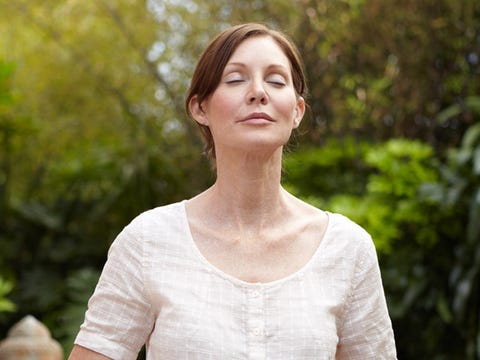
Breathing Meditation
Find a comfortable place where you won't be disturbed. Turn off any distractions such as mobile phone/computer. You can do this sitting or lying down.
If sitting, sit upright in a chair, feet on the ground and back straight. You can place a cushion in the lower part of your back if it feels  uncomfortable. Close your eyes, or focus on a point in front of you if you wish to keep your eyes open.
Bring your attention to your navel, and breathing through the nose, be aware of the tummy gently moving out as you inhale, and falling back towards your spine as you exhale. Don't force the breath. 
Continue with this rhythm, each time trying to slow the breathing down. In your head count slowly in for 4 and out for 4. If this feels comfortable, count in for 4 and out for 6. If at any time it feels uncomfortable, just return your breathing back to normal pace and try again when you are ready. 
If you mind wanders at any point, acknowledge it and be aware this has happened. It's perfectly natural at first. Once you are aware it has wandered, just come back to focusing on your breathing. Keep this practice up for at least 2 minutes with the counting. Then continue for longer if you can, not counting with the breathes, but simply being aware of the breathing and the air flowing in and out of the nostrils. 
Practice this daily. Also throughout the day, have micro moments where you stop for a minute or two, and be aware of the breathing and the air flowing in and out. If you are feeling stressed, this will help calm the body and mind. You can also imagine any stress leaving the body as you exhale. Breath in calm, exhale any stress.


Monday, 25 November 2019

How Can Using A Daily Journal Improve Your Life?


Benefits of writing a daily journal.

Journaling can be effective for many different reasons and help you reach a wide range of goals. It can help you clear your head, make important connections between thoughts, feelings, and behaviors, and even buffer or reduce the effects of mental illness!

Journaling helps keep your brain in tip-top shape. Not only does it boost memory and comprehension, it also increases working memory capacity, which may reflect improved cognitive processing. Boosts Mood.

Journaling can be a great stress reducer through organizing one's thoughts, clearing one's mind and facilitating problem solving. There are many benefits to keeping a journal. ... Journaling can reduce stress by helping one get rid of negative thoughts.

It's not only true that scientists have found that writing expressively (the way we often do in a journalimproves working memory, it's also a fact that recording the ins and outs of your life in a journal gives more permanence to an often fleeting past.

It's simply writing down your thoughts and feelings to understand them more clearly. And if you struggle with stress, depression, or anxiety, keeping a journal is a great idea. It can help you gain control of your emotions and improve your mental health.


Wednesday, 29 August 2018

Things You Must Do To Lose Weight Over 40

With age comes many things: greater wisdom; deeper empathy; a greater sense of knowing who you are; and less happily, the very real possibility of a bigger pants size.
Starting in your 40s, it's easier than ever for the pounds to creep on—and tougher to take them off. Thanks to a slowing metabolism you could be burning 300 fewer calories per day than you did in your early 20s, according to the American Council on Exercise. What's more, falling estrogen levels during perimenopause and menopause (which begin in your early 40s) can cause insulin sensitivity, which makes it harder for your body to control the amount of sugar in your blood, says Caroline Cederquist, MD, a board-certified bariatric surgeon and founder of the meal delivery service BistroMD. This can make your blood sugar levels more prone to spiking and crashing, which can increase your urge to snack—especially on high-carb, sugary junk, Cederquist says.
Put it together, and it's no wonder so many women over 40 end up hitting a weight loss wall. But it doesn't have to be that way. With a few smart moves, you can outsmart your slowing metabolism and get lean—for good.
Sure, some things change after 40. But the basic tenets of successful weight loss stay the same, no matter how old you are. Before you take steps to ageproof your diet plan, it's a good idea to brush up on the basics.

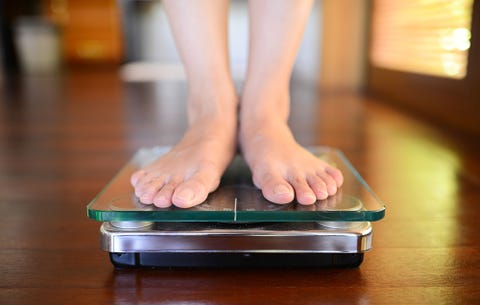
scale
  • You need to eat less. It doesn't matter if all you eat is grilled chicken, brown rice, and broccoli. If you don't cut back on your portions, you won't lose weight. Everyone's calorie needs are different, but in general, a woman eating 2,000 calories per day should aim to cut back by 400 to 500 calories, recommends Frances Largeman-Roth, RDN, nutrition expert and author of Eating in Color.
  • You should aim to lose 1 to 2 pounds per week. Those drop-a-dress-size-in-a-week plans are tempting. But the slow and steady approach is more sustainable since you're more likely to build healthy habits (like exercising more and eating more veggies) that will help you stay leaner in the long term.
  • Skipping meals will mess with your metabolism. When you skip breakfast or dinner, it tells your body to squirrel away calories instead of burning them. Skipping meals also increases the chances that your blood sugar will crash, leaving you ravenous for a quick energy hit in the form of sugary carbs, Cederquist says.
  • Keeping your carbs in check—especially the refined kind—can help combat age-related insulin resistance and promote steady blood sugar levels, Cederquist says. Adding more protein to your diet can also help. Not only does the nutrient help stave off age-related muscle loss, but it also helps keep your metabolism revved, because the body has to work harder to digest it than, say, a bagel, Cederquist says. How much of each nutrient you consume each time you eat matters, too. In a perfect world each meal and snack should have:
  • Vegetables or fruit: Fill half of your plate with these. They’re high in fiber and water, so they'll take up lots of space in your stomach without contributing too many calories to your diet.
  • Lean protein: Your plate should have a serving that’s about the size of your palm. Good sources include Greek yogurt, eggs, chicken, and fish. 
  • Complex carbohydrates: Your plate should have a serving that’s the size of your closed fist. Whole grains, beans, fresh fruit, and starchy veggies (like sweet potatoes) are all good choices.
  • Healthy fats: These can add up quickly when you're trying to lose weight, so it's worth measuring your fats. Aim for 7 to 10 grams every time you eat. That’s 1½ tsp of olive oil, a quarter of an avocado, or two tablespoons of nuts or seeds.


Source:prevention.com/weight-loss/a20465042/lose-weight-over-40/

Tuesday, 28 August 2018

Preventative Health Habits Over 40

In your fabulous 40s, you still feel invincible—these are great years, after all.
But subtle changes are occurring that need to be addressed before they become problems. Here are some of the most common health shifts women experience: 
  • Metabolism: Slowing by 2% per decade.
  • Muscle: Down by 6 to 7 pounds from 10 years ago.
  • Bone: Dropping by about 1% a year since your mid-30s.
  • Libido: Declining because of high stress levels and hormonal changes.
  • Stress: Especially high because of worries about kids, parents, health, career, and finances.
  • Depression: More likely now than later in life.
Establish the following preventative habits now and you'll not only counter these changes—you'll stay healthier, sharper, more energetic, and more fulfilled for years to come.
Eat breakfast every day
Nutritionists agree that eating breakfast is essential to keeping weight down and calorie-burning metabolism up. In one study, women who ate a big breakfast lost 21% of their body weight after 8 months, compared with 4.5% for women on a low-carb diet who made breakfast their smallest meal. The healthy-breakfast eaters continued losing over time even though they ate more total calories, while the low-carb group started regaining weight after 4 months. 
Reason: A solid meal at the start of the day works in concert with metabolism, which is highest in the morning, fueling activity and preventing cravings that arise when blood sugar drops
Jump-start your metabolism
Strength-training for 6 months can increase your resting metabolism (a study on men showed a boost of 7%), so you’ll burn more calories even when you’re sitting on the sofa. 
Bonus: Strength-training also helps you shore up bone, maintain balance, and avoid injury—important for protecting your skeleton both now and when you’re older. Aim to exercise at least 30 minutes most days of the week.
Boost calcium and vitamin D
Both are essential for strong bones, but many experts feel current benchmarks are too low. The National Osteoporosis Foundation recommends that women in their 40s get 1,000 mg of calcium and 400 to 800 IU of vitamin D every day from foods like fortified milk or salmon, along with supplements if needed. Some nutrition experts suggest getting up to 1,000 IU a day for optimal health
4. Practice stress control
A healthy, calm heart beats faster when you breathe in, slower when you breathe out. But stress inhibits this natural "heart rate variability," triggering unhealthy changes bodywide, including increased blood pressure, less energy to the brain, lower libido, and faster cell death. "In effect, stress makes you age faster," says Claire Michaels Wheeler, MD, PhD, author of 10 Simple Solutions to Stress.
To get your heart into a healthier rhythm, breathe in through your nose for 4 beats and out for 8 at least twice a day or anytime you feel pressure. "That activates the vagus nerve that runs from the brain to the pelvis, relaxing the heart, muscles, airways, gastrointestinal tract, and blood vessels," says Dr. Wheeler.
Pump up protein
Getting foods with all the amino acids needed to form complete proteins at least twice a day boosts levels of mood-lifting neurotransmitters in the brain, which can help relieve symptoms of depression, like slow thinking and poor memory. Aim for 4 ounces of protein at each meal. Good sources include fish, eggs, and quinoa. But don’t totally skip carbs: They boost mood by increasing production of serotonin in the brain.
Go out with your girlfriends
Relaxing with friends reduces stress, boosts self-esteem, and even makes you more loving toward your partner when you get home. "Women are terrific at connecting socially but often let it fall by the wayside in their 40s because of career and family demands," says Edward Schneider, MD, emeritus dean and professor of gerontology and medicine at the University of Southern California’s Andrus Gerontology Center. Women with extensive social networks through family, work, volunteer organizations, religious groups, or hobbies have lower blood pressure, less diabetes, reduced risk of heart disease, and half as many strokes as women who are less well connected.

image


Source:prevention.com/life/g20496315/8-things-every-woman-in-her-40s-should-do/?slide=9

Monday, 11 December 2017

Get Active For Mental Wellbeing

Being active is great for your physical health and fitness, and evidence shows that it can also improve your mental wellbeing.
We think that the mind and body are separate. But what you do with your body can have a powerful effect on your mental wellbeing.
Mental wellbeing means feeling good – both about yourself and about the world around you. It means being able to get on with life in the way you want.
Evidence shows that there is a link between being physically active and good mental wellbeing.
Being active doesn’t mean you need to spend hours in the gym, if that doesn't appeal to you. Find physical activities that you enjoy and think about how to fit more of them into your daily life.

How exercise helps your mental wellbeing 

Scientists think that physical activity helps maintain and improve wellbeing in a number of ways.
Physical activity can help people with mild depression. Evidence shows that it can also help protect people against anxiety.
Physical activity is thought to cause chemical changes in the brain, which can help to positively change our mood.
Some scientists think that being active can improve wellbeing because it brings about a sense of greater self-esteem, self-control and the ability to rise to a challenge.

Image result for mental wellbeing


Source:nhs.uk/Conditions/stress-anxiety-depression/Pages/mental-benefits-of-exercise.aspx

Friday, 8 December 2017

Should You Exercise If You Have A Cold?

Colds are more common in winter, but you don't necessarily have to stop exercising if you're feeling under the weather. According to Dr Keith Hopcroft, a GP from Basildon in Essex, use common sense and listen to your body.
"If your symptoms are not severe and you generally feel OK, then you can exercise. If you feel absolutely rotten, then it's best not to go."
However, it is important not to exercise if you have a fever. A fever is when your body's temperature is 38C (100.4F) or above and is rarely a symptom of a cold.
"If you exercise with a fever," says Dr Hopcroft, "it'll make you feel worse. In very rare cases, exercising with a fever can lead to the virus affecting your heart, which can be dangerous."
If you have asthma, take extra care when exercising in winter as cold air can trigger symptoms. Use your inhaler before you exercise and have it with you during your activity.
Keep Warm
If you're starting a new exercise regime, don't overdo it. Slowly build the amount of exercise you do. If you can't manage 30 minutes in one go, break it up into 10-minute chunks.
Always warm-up for up to 10 minutes before you start. Walk at a brisk pace, or jog to warm your muscles.
Make sure you're warm if you're going outside. Wear several layers to keep the heat in. A lot of heat escapes through your head, so consider wearing a hat as well.

Image result for having a cold


Source:nhs.uk/Livewell/fitness/pages/winterexercise.aspx

Wednesday, 6 December 2017

Reasons To Exercise In Winter

Research has shown time and again that regular exercise strengthens your immune system so it can fight off bacterial and viral infections. This becomes particularly important in winter when colds and flu rear their ugly heads.When you exercise and get your blood pumping, immune cells circulate through your body more quickly helping them seek and destroy infections. But this boost only lasts for a few hours, so exercise needs to be regular for long-term effects.
Whether it’s the usual winter blues or the more serious SAD (seasonal affective disorder) putting a gloom over the colder months. A daily workout releases feel-good, de-stress brain chemicals, gives you a break from the daily grind and helps ease depression. Plus, if you combine exercise with the great outdoors you can cheer yourself up even more!
We know that after exercise, the brain releases the “feel-good” chemicals serotonin and dopamine, which can help to reduce anxiety and depression while boosting wellbeing,”45 minutes in the day could change your whole outlook on winter!!
Being cooped up with nothing but heaters to keep the air moving means fresh air is much harder to come by in winter! Generally, the air outside is healthier then that inside so going for a walk or run outside gives your lungs a chance to detox and breathe deeply without concern for breathing in other people’s bugs (at home or from the office!)
Image result for winter exercise
In the colder months it is so easy to turn to comfort food, because its so satisfying and it makes us feel good, well for a little anyway, and then we feel guilty. Its so easy to become a hibernating bear! No wonder it’s known as the ‘winter weight gain’ period. The average person puts on up to 4 kg! The only way to make up for those added treats is to increase the amount of exercise you’re doing. Try and balance your energy in and energy out then the shredding of clothes in spring wont be such a shock!


Source:livelifegetactive.com/blog/exercise-in-winter/

Friday, 1 December 2017

Why Is My Waist Size Important?

Your risk of some health problems is affected by where your body fat is stored, as well as by your weight. Carrying too much fat around your middle (waist) can increase your risk of developing conditions such as:

heart disease
type 2 diabetes
cancer

Measuring your waist

Measuring your waist is a good way to check you're not carrying too much fat around your stomach, which can raise your risk of heart disease, type 2 diabetes and stroke.
You can have a healthy BMI and still have excess tummy fat – meaning you're still at risk of developing these diseases.
To measure your waist:
  • find the bottom of your ribs and the top of your hips
  • wrap a tape measure around your waist, midway between these points
  • breathe out naturally before taking the measurement
Regardless of your height or BMI, you should try to lose weight if your waist is:
  • 94cm (37ins) or more for men
  • 80cm (31.5ins) or more for women
You are at very high risk and you should contact your GP if your waist is:
  • 102cm (40ins) or more for men
  • 88cm (34ins) or more for women

Losing weight around the stomach

Most people who are overweight find their excess weight is down to eating more energy (calories) than they burn.
Weight gain occurs when we regularly put more calories into our bodies than we use. Over time, that excess energy is stored by the body as fat.
If you're trying to lose weight, it's a good idea to eat less and be more active.
Hula hooping is an excellent way to trim the waist and burn calories without too much effort!

Image result for slim waist


Source:nhs.uk/chq/Pages/849.aspx?CategoryID=51

Tuesday, 14 November 2017

Exercise You Can Take Anywhere....

If you're anything like me I like to exercise even when I'm away. Doing some exercise as part of my weekly routine is important to me, so having items I can use to exercise with and pack easily into my suit case are a must.

I have recently been asked to try out a hula hoop. Not your solid circular hoop but a weighted, flexible type.

I really didn't know what to expect, let alone even see how it could possibly be effective but I was willing to give it a try.

My initial thoughts were that it would be difficult to use but I liked the idea of being able to take it with me on my travels AND it was easy to store at home, so I reserved all judgement.

It took me only a short time to get the hang of using it and because of the weight and design I could really feel it working. Not only did it work my waist and hips but I also felt like I'd had a cardio workout and felt slightly breathless and sweaty (all good signs in my eyes!!)

I was really impressed by this piece of equipment and could definitely feel a difference.

Not only could you use it to trim your waist but it was cleverly designed to enable you to also work other parts of the body including your arms (all will be revealed).

I'll be sharing a video on how to use it.

If you can't wait that long, then here is the link to the hula hoop HERE

It really is amazing, easy to use and store, so it ticks all of the boxes for me 👍


Friday, 27 October 2017

Benefits of Hula Hooping. Q&A

Can Hula Hooping help you lose belly fat?
If you hoop for 30 minutes, you'll burn 210 calories. The heart rates of research participants elevated to 84 percent of their maximum heart rate, sufficient for burningfat as fuel. To lose abdominal fat, calories must be burned. Hooping contributes to overall weight loss, including the extra fat across your core.
Is a hula hoop good for abs?
Fat Loss. While the claim that you can spot train to lose weight in one area is a myth, it is possible to lose fat wherever it is in excess on your body. Since working out with a Hula-Hoop is a very good aerobic exercise, it burns more calories than other ab-building anaerobic exercises.
What is a hula hoop good exercise for?
Using a hula hoop works your arm, leg and core muscles. Hula hooping is a total-body workout that not only tones your muscles, but also improves joint flexibility and balance. The rocking motion of hula hooping is also relaxing and fun, which can relieve stress.
Is a weighted hula hoop better?
In fact, any type of hula hooping, using a weighted hula hoop or a regular hula hoop, can help you meet your exercise goals and provide aerobic activity. And it can be fun! Weighted hula hoops are bigger and heavier than are traditional hula hoops. ... The weight of the hoop is up to you
What are the benefits of hula hooping?
Hooping will make you feel the (calorie) burn. Hooping has been proven to burn over 400 calories per hour by the American Council on Exercise, although thecalorie-burn from hooping may be as high as 600 calories per hour when other parts of your body, such as your arms and legs, are engaged
How many calories do you burn with a weighted hula hoop?
The American Council on Exercise (ACE) funded a study completed at the University of Wisconsin, and found that a 30 minute weighted hula hoop workout which consisted of hooping moves and twirling motions around the arms, waist, and legs burned roughly 7 calories per minute.
Image result for hula hoop waist

Wednesday, 25 October 2017

I Lost 85 Pounds By Hula Hooping

Cori Magnotta, 32, was the kind of person who couldn't stick with a workout routine. But faced with stubborn extra pounds after the birth of her son, she decided it was time to make a change. She lost 85 pounds in a year doing an exercise she loved: Hula-Hooping. 
When I was 5, Hula-Hooping was my party trick. I was really good at it. As I got older, I Hula-Hooped less and less and eventually joined the real world, put the hoop aside, and forgot about it.
I'm 6 feet tall and I've always struggled with my weight. I just didn't find working out fun. I would join a gym, go once, and never go back. When I was pregnant with my son, I developed preeclampsia, or high blood pressure, and had to be on bedrest for 2 months. Being sedentary contributed to my weight gain during my pregnancy. At my heaviest, I was 265 pounds. My son was a big baby—10 pounds!—so I attribute some of that to him. But I struggled with getting the rest of it back off. I developed hypothyroidism after my pregnancy, and my metabolism had slowed, making it easier to gain weight and that much more difficult to lose it.
In October 2014, I was down to 250 pounds, and I started searching the internet for fun workouts. I came across FXP Fitness, which uses a weighted Hula-Hoop in a routine that borrows from barre, yoga, and pilates. I remembered how much I loved hooping as a kid and signed up for a class. I drove from my home in Portland, CT, to Massachusetts, the only place classes were available at the time. "Let me go see what this is all about," I remember thinking.
I immediately loved it. It's impossible to not smile while Hula-Hooping. I wore a fitness tracker and a heart rate monitor and watched my heart rate spike like I was doing a high-intensity interval training workout. I could burn as much as 800 calories in an hour, doing the class's combination of ballet movements, yoga poses, strength exercises like squats, and of course traditional waist hooping. We even hooped around our arms and our hands to give our waists a break. We used the weighted hoop to do stretches and hooped while we did dance routines like the YMCA and the Macarena.
lose weight by hula hooping
I took the 2 lb hoop home with me to Connecticut and started hooping on my own. I started with just 10 minutes a day and built up my stamina. It was easy to stand in front of the TV and whip it around my waist, even if I had toys all over my living room floor from my son. It didn't take me long to decide I wanted to become an instructor myself. I decided I was going to push my fears aside, and I went to Boston to get certified.
Hooping helped me slowly and steadily lose weight, and in about a year, I was down 85 pounds to 165. It helped that I now have a 2-year-old I have to chase everywhere! Once you start exercising, there's a snowball effect: You have more energy to do more things. I started eating a little bit better, because I now had the energy to cook instead of going to the drive-thru. I had the energy to play with my son instead of watching him at the playground. Now, I teach hooping three times a week
I competed in pageants when I was young, and 20 years later, I gave it another shot: I was recently crowned America's Fit Mrs., and I Hula-Hooped as my talent. I was even recently featured as Trainer of the Month with FXP Hoop Fitness. If you told me 2 years ago I would now be a fitness instructor, I would have laughed at you.
The most important thing is that it's fun. Most people crack up when I tell them I'm a Hula-Hoop instructor and tell me they can't hoop. But I have yet to meet someone I can't teach to hoop! I have 21-year-olds and 65-year-olds in my class, petite people and tall people, couch potatoes and marathoners—it's for anyone and everyone.


Source:prevention.com/weight-loss/i-lost-85-pounds-by-hula-hooping

Monday, 23 October 2017

Think Hula Hoops Are Toys? They Could Change Your Life...

As told by Jenny Wood.......
Going through my wardrobe recently, I found a pile of brightly coloured bikinis languishing in a drawer. They can go straight to the charity shop, I thought glumly, stuffing them into a bin bag. 
When I gave birth to my little boy 18 months ago, I gained something else as well - a wobbly belly, or, as it’s affectionately known, a ‘mum tum’. So, I was pretty sure my bikini-wearing days were over.
Don’t get me wrong, I don’t hate my body. Long walks with a buggy, breastfeeding and running after a toddler have actually helped me lose more than the three stone I put on during pregnancy. But, while the rest of me has slowly shrunk back into shape, my tummy hasn’t followed suit. Wearing anything body-hugging  still fills me with fear.

I’d love to have abs like Olympic athlete Jessica Ennis. And, it would seem, I’m not alone. In a recent survey of 3,000 women, 58 per cent said their stomach was the body part they most wished they could change. 
The problem is, like most people with children or busy lives, I can’t spend hours in the gym or afford to hire a personal trainer. But now, thanks to the latest celebrity fitness craze, I may have found an unlikely solution: hula hooping.


‘I’m all about hula-hooping right now!’ tweeted Kelly Osbourne recently. ‘Five mins in the morning, five mins at night ... in five days I lost two inches from my waistline!’ Michelle Obama, who can apparently hula while kneeling, Grace Jones, who hooped throughout her Queen’s Diamond Jubilee performance last year, and Beyoncé have all credited the humble hoop for their fantastic figures. If they can do it, I reckon, so can I.
So I arrange to meet hula hooping expert Anna Drury, 30, at a gym in South London. Anna first picked up a hoop in 2006 after seeing them used in a performance at a music festival. 

Noticeable difference: Jenny before, the challenge, left, and, right, 5lb lighter with a flatter stomach After: Jenny has lost 5LB

She’s been hooping professionally for five years now and teaches in schools, runs adult classes and performs at events worldwide, often using several hoops at once and even setting them on fire. Crikey.

The last time I picked up a hula hoop, I had ankle socks and pigtails, so I’m understandably nervous as I join the 12 other women in the evening’s class. Anna believes that everyone - even those who are hopelessly uncoordinated like me - can learn to hula hoop. 
The secret is lots of practice and the right equipment - the larger and heavier the hoop, the easier it is to control and the more it’ll help you tone up. 
As for what to wear, apparently the fewer or tighter the clothes the better. That way the hoop sticks to you rather than the fabric, so I opt for a purple vest top and blue leggings. 
As the class starts, Anna explains that hooping is like riding a bike - it’s all about finding your own personal rhythm and once you’ve got it, it never goes. Music helps you relax, making the whole process much easier, so she turns on the stereo and off we go. 

Getting the hula hoop ‘in flight’ (to use the technical term) is actually easier than I’d thought - I just hold it around my waist and fling it sideways - but keeping it twirling for more than a few rotations is going to take some practice. 
Anna’s tip is to stay positive - just concentrate on trying to keeping the hoop from falling. That’s easy for her to say, casually spinning her hoop around her neck, but I get countless knocks as mine keeps clattering to the ground. 
Anna cheerfully explains that bruises are par for the course when learning, and that my stomach will toughen up, so I should look at them as war wounds. 
Slowly, I start to get the hang of it, although I find it much easier to hoop in an anti-clockwise direction than a clockwise one (apparently this is normal for right-handed people). However, if I can learn to hoop in both directions I’ll get better-looking abs, because I will then be working the muscles on both sides of my body. 


Read more: http://www.dailymail.co.uk/femail/article-2333002/The-10-minute-workout-rolled-away-spare-tyre-weeks-Think-hula-hoops-toys-They-change-life-.html#ixzz4wKPS5HLv 


I will be doing my own trial of a different kind of hula hoop in the next few weeks with a video so wacth out for that!!


Monday, 3 April 2017

Swim Your Way to Health

Every type of exercise has its selling points. But swimming is unlike any other aerobic workout in a few important ways.

First, the fact that you’re submerged in water means your bones and muscles are somewhat unshackled from the constraints of gravity, says Hirofumi Tanaka, a professor of kinesiology and director of the Cardiovascular Aging Research Lab at the University of Texas.

This makes swimming the ideal exercise for people with osteoarthritis, for whom weight-bearing exercise can be excruciatingly painful. According to Tanaka's research of people with the condition, swimming decreases arterial stiffness, a risk factor for heart trouble. More of his research has linked swim training with lower blood pressure among people with hypertension. The coolness and buoyancy of water are also appealing to people who are overweight or obese, for whom load-bearing aerobic exercises like running may be too hot or uncomfortable, Tanaka says.

Image result for swimming

But don't be fooled; your body is working hard when you’re in the pool. Water is denser than air, so moving through H2O puts more external pressure on your limbs than out-of-water training, studies have shown. Even better, that pressure is uniformly distributed. It doesn’t collect in your knees, hips or the other places that bear most of the burden when you exercise with gravity sitting on your shoulders.

How you breathe during a swimming workout is another big differentiator, says David Tanner, a research associate at Indiana University and co-editor of an educational handbook on the science of swimming. During a run or bike ride, your breath tends to be shallow and your exhales forceful. “It’s the other way around with swimming,” says Tanner. “You breathe in quickly and deeply, and then let the air trickle out.” Because your head is under water when you swim, these breathing adjustments are vital, and they may improve the strength of your respiratory muscles, Tanner says. “This kind of breathing keeps the lung alveoli”—the millions of little balloon-like structures that inflate and deflate as your breathe—“from collapsing and sticking together."

Plus, who wouldn't want a swimmer's body? Swimming fires up more of your body’s major muscle groups than other forms of cardio exercise. “If you think about running or biking, you’re mostly using your lower body,” Tanner says. Swimming not only engages your legs, but also recruits your upper body and core—especially your lats, the muscles of your middle back, and triceps, the backs of your upper arms. “You look at pictures of swimmers, and you see how the upper body development is really tremendous," he says.

Finally, your back benefits. Working out in a horizontal pose—as opposed to the upright position your body assumes during other forms of aerobic exercise—may be an ideal way to counteract all the time you spend hunched over a desk or steering wheel. “There’s no hard impact on your back like there is with running, and instead of being bent forward like you would be on a bike, your back tends to be arched slightly in the opposite direction,” Tanner says. That may help improve your posture and prevent the back injuries and pain that stem from long stretches of sedentary time.

The exercise is also linked to many of the same life-extending, heart-saving, mood-lifting benefits associated with other forms of aerobic exercise. And it's fun, which matters. “People tend to enjoy swimming more than running or bike-riding,” Tanaka says. While about half of people who try a new exercise program give up within a few months, people who take up swimming are more likely to stick with it, he says.

If you’re sold on swimming, Tanner recommends starting slowly. “Don’t try to do too much too early, and focus on proper technique,” he says. Consider enlisting the help of an instructor if you didn’t have any formal coaching as a kid. “If you’re not used to swimming, it can be hard to relax in the water,” he says. Being nervous and tight may limit the sport’s benefits.


Start off with 30-minute sessions three times a week, and don't forget to take frequent breaks. “You want to ease into it and build up," he says, "just like a running program."

Image result for swimming


Source:time.com/4688623/swimming-pool-health-benefits/
 
Blogger Templates